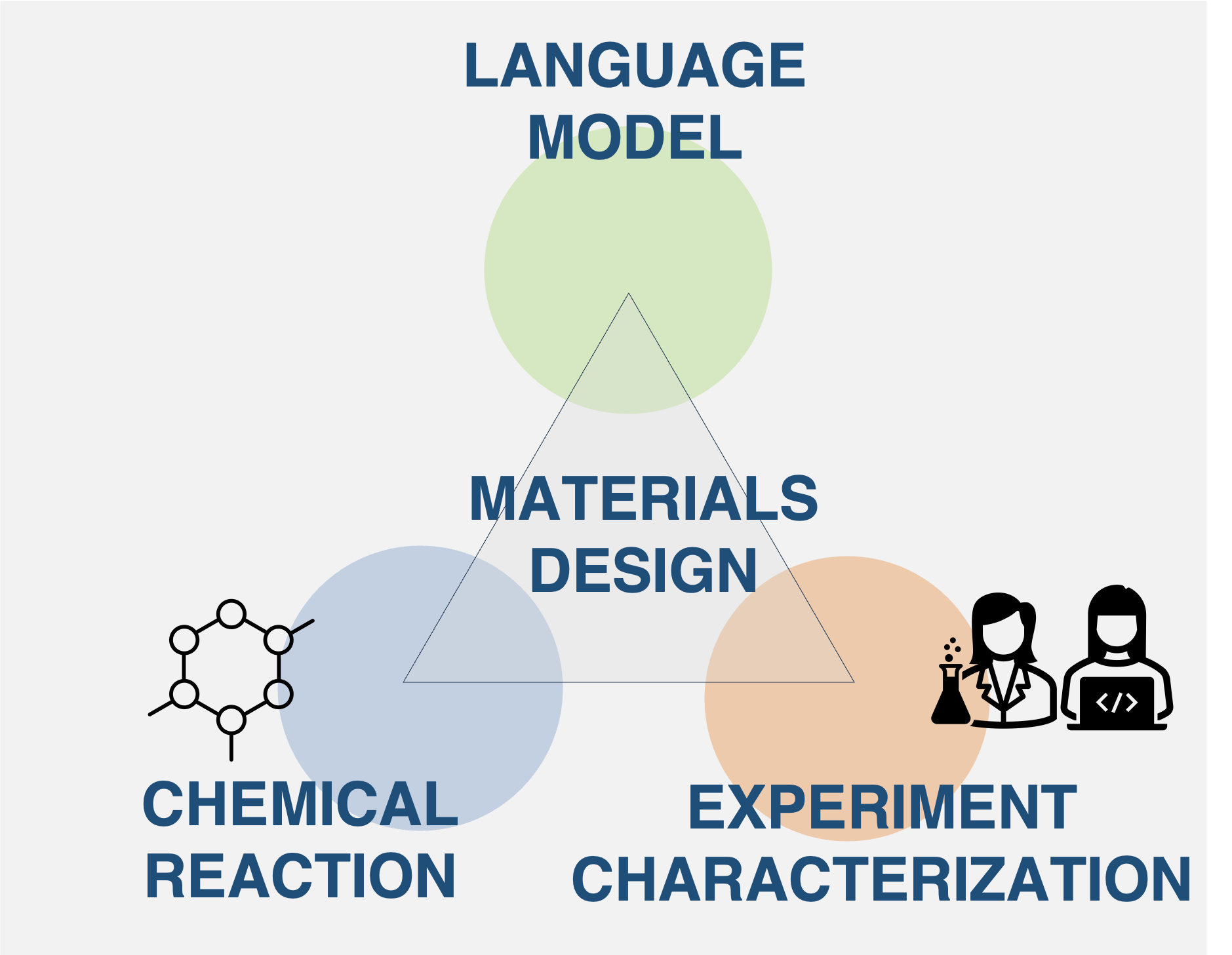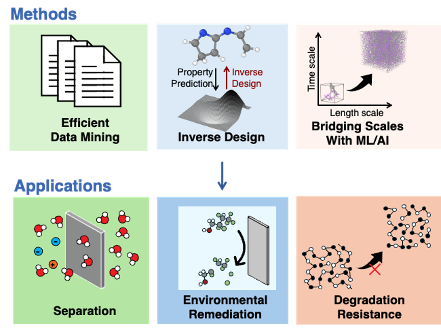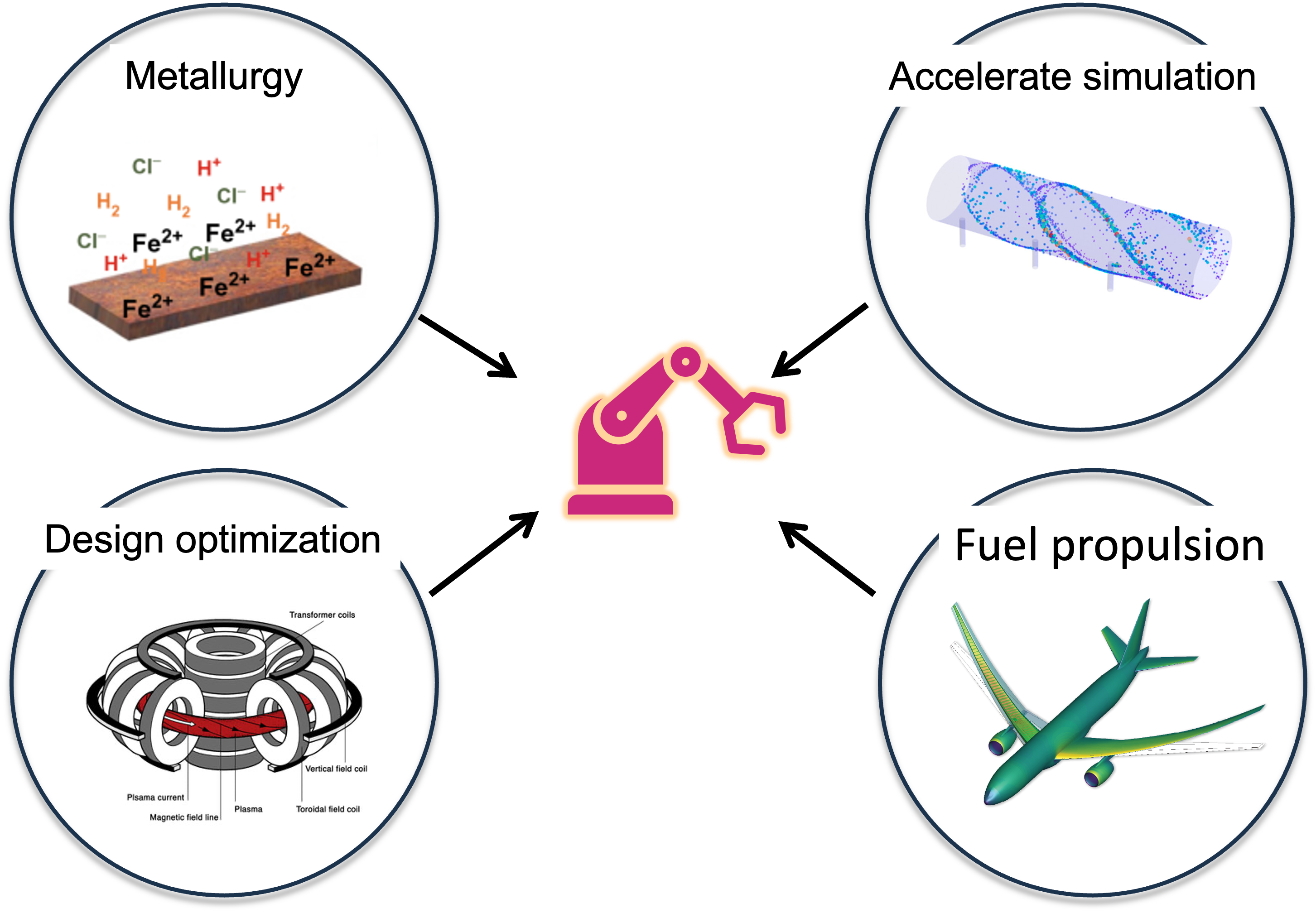
We are the MIND Lab, based in the Department of Mechanical Engineering at Binghamton University. Our research develops artificial intelligence and atomistic simulation methods to understand and design materials for interfacial engineering, microelectronics reliability, energy technologies, and environmental sustainability.
Jointly affiliated with the Materials Science & Engineering (MSE) Program
We develop machine learning and atomistic simulation methods to understand how molecular structure, confinement, chemistry, and mechanics control transport, adhesion, reactivity, and stability at materials interfaces.
We combine spectroscopy simulation, neural networks, and generative models to infer atomic structures and structure–property relationships in disordered and complex materials.
We use quantum chemistry, molecular simulation, and data-driven modeling to study materials and molecular systems relevant to clean energy, catalysis, separations, and PFAS degradation.
Our project 'AI-Driven, Process-Aware Reliability Modeling of Confined Hybrid Bonding Interfaces via Atomistic Simulation and Hidden-State Inference' was selected for funding by the Integrated Electronics Engineering Center (IEEC) for the 2026–2027 cycle.
2026-06-02Rebecca Jang was selected as a 2026 McNair Summer Research Fellow.
2026-06-02Cesar Le, a senior Computer Science student from SUNY New Paltz, joined the group through Binghamton University's AI for the Public Good program.
2026-04-20Undergraduate researcher Rebecca Jang presented her work on machine learning for PFAS at the NYSP2I Student Research Poster Session.
2026-01-05Usama, Golam, and Rebecca joined the group.
2025-08-20Hyuna Kwon started as Assistant Professor in Mechanical Engineering at Binghamton University.